Lesson 9 of 36
How to set makeup with powder
Powder isn't meant to cover your whole face thickly. The secret is targeting only oil-prone zones so your base stays smooth all day.
 1·3·42
Watch · 19 sec
All 4 steps on one face
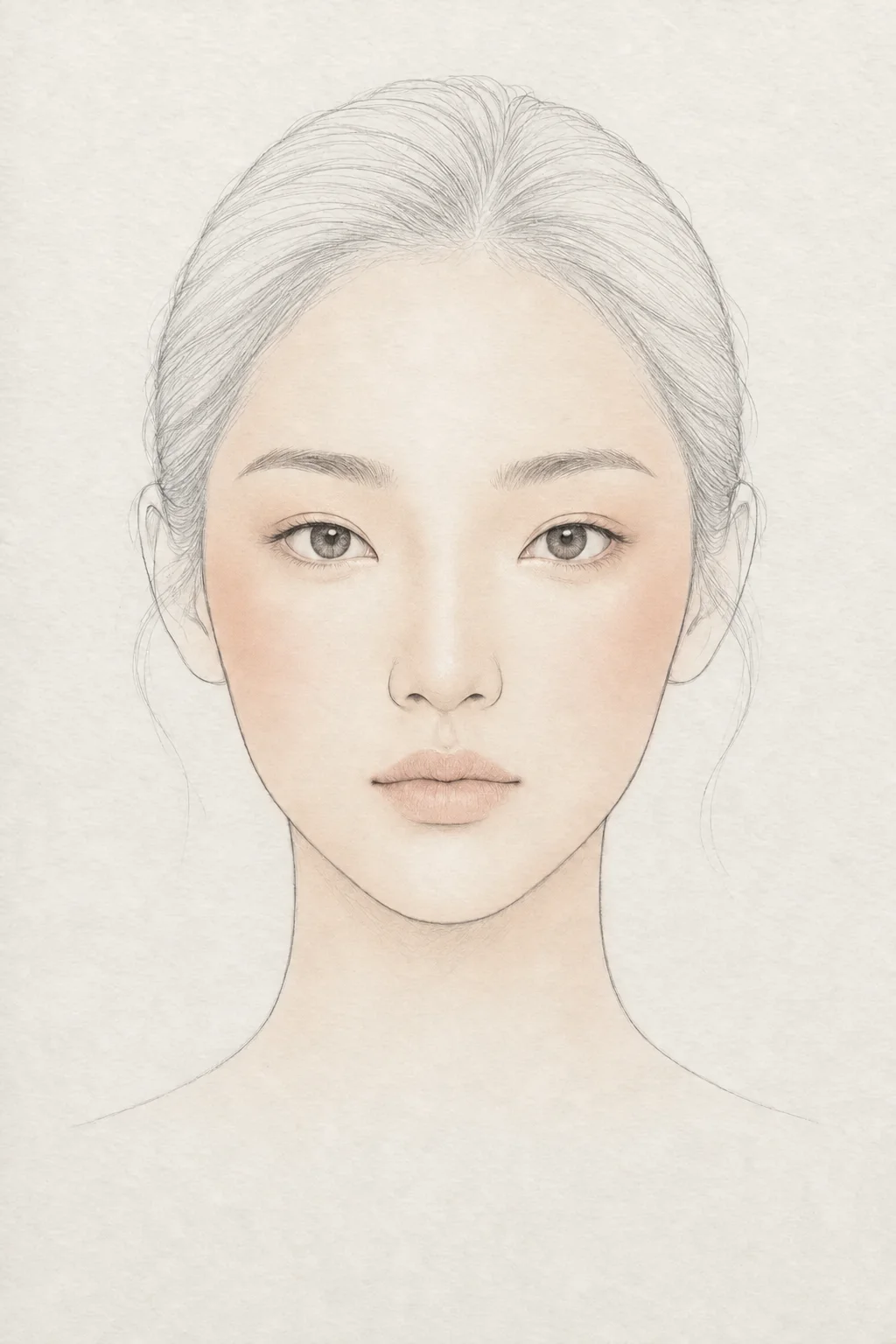
The chart shows where each step goes; the video shows how the face changes. Step-by-step details are below.
JJ is an AI-generated model. Makeup changes are illustrated by AI.
infoCoupang links on this page are affiliate links (Coupang Partners) — we may earn a commission at no extra cost to you. YesStyle and Amazon links are plain searches. Each link searches for a product type, not a specific brand we endorse.
1Skin
Sweep T-Zone with a Brush
Lightly sweep loose powder over the forehead, nose, and chin with a fluffy brush. This controls shine and sets your foundation without feeling heavy.
Powder brush · translucent loose powder2Eyes
Press Under-Eyes with a Puff
After applying concealer, press powder under the eyes with a velvet puff to lock it in place. Tap off excess powder first to prevent creasing.
Velvet puff · powder3Skin
Baking for Oily Skin
If you have very oily skin, apply a generous layer of loose powder on key areas, wait 1–2 minutes, then sweep away the excess.
Large powder brush · translucent powder4Skin
Finish with a Hydrating Mist
Hold a mist 20cm away and spritz lightly over the face to melt away any powdery finish. It keeps your skin looking fresh and seamless.
Fixing mist
lightbulbTips
- Tap excess powder off on the back of your hand before pressing it onto your skin to prevent caking.
- If you have dry skin, powder only the under-eye area and T-zone, leaving the cheeks untouched.
errorCommon mistake
Rubbing powder hard all over the face without dusting off excess scratches the foundation underneath and makes it look cakey.
health_and_safetyTry any new product on your inner arm first. If redness, itching or irritation appears, stop using it and consult a dermatologist. Keep eye products out of the eyes.
The face chart is an AI-generated illustration showing where each step goes — not a photo of a real result.