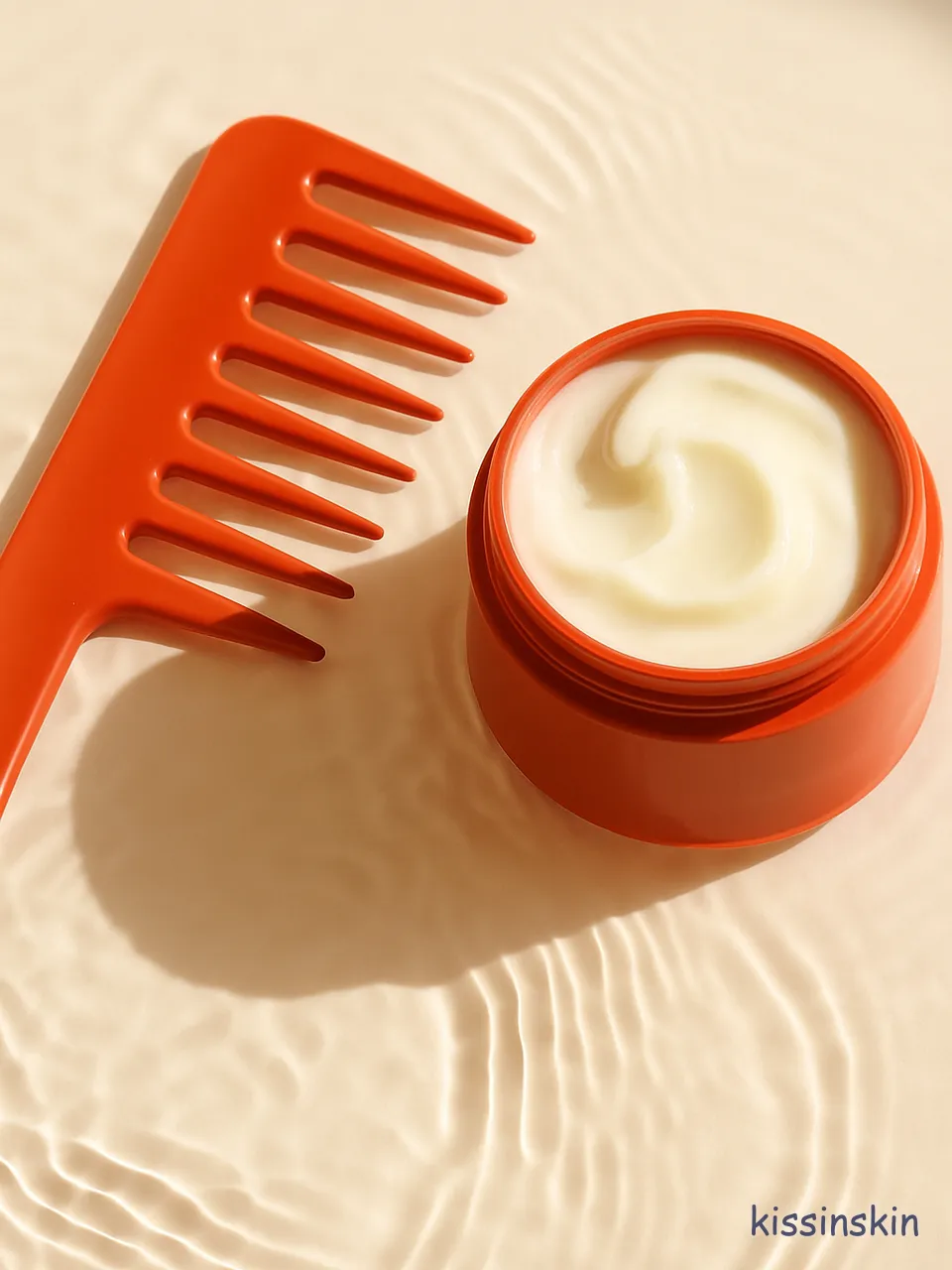
"Skinification" refers to the trend of haircare products adopting the formulations and textures of facial skincare. By 2026, it is the fastest-growing segment in the global haircare market, with new categories like scalp toners, scalp serums, scalp ampoules, and scalp masks rapidly gaining traction.
The scientific rationale is clear. The average epidermal thickness of the scalp is about four times that of the face, but the pore density is six times higher. This means the scalp is an environment with active sebum secretion and easy bacterial growth. Dermatologists agree that traditional shampoos cannot thoroughly care for deep pores, making dedicated scalp skincare steps necessary.
Among Korean brands, Dr.FORHAIR was the first to launch a scalp toner and ampoule line, while Mise-en-scène separated its 'Scalp Care Line' into a distinct display. Globally, Augustinus Bader's 'The Scalp Treatment' and Ouai's scalp serum are bestsellers. Price ranges are 30,000–70,000 KRW for Korean mid-range, and $60–120 for global luxury.
Recommended scalp skincare routine: (1) Shampoo → (2) Massage scalp with toner for 1 minute → (3) Apply scalp serum or ampoule to roots → (4) Wrap with a warm towel for 5 minutes → (5) Hair conditioner. Use 2–3 times a week. During the first 1–2 weeks, mild itching or slight irritation may occur, signaling the start of care, but this stabilizes after 4 weeks.
Market data shows the scalp skincare category is the fastest-growing in the haircare industry. According to NIQ, global scalp care new product sales grew +63% year-on-year, and Korea's Olive Young saw its scalp care category double in sales from 2024 to 2026. In the US, luxury lines like Ouai, Briogeo, and Augustinus Bader lead the market, while in Japan, Shiseido Tsubaki and POLA operate their own scalp lines. As scalp care expands beyond dandruff prevention to include anti-aging and hair loss prevention, the very definition of the category is evolving.
The most common mistakes consumers make when starting scalp skincare are: (1) Believing hair conditioner alone is sufficient—conditioner is for hair, so its effect on the scalp is limited; (2) Using overly strong products (such as high-concentration salicylic acid scalp toners) at once, which can cause cumulative irritation; (3) Daily use—since the scalp needs more recovery time than the face, 2–3 times a week is optimal. For a safe start, add just a scalp toner for 4–6 weeks before expanding to serums or ampoules. For those in their 30s and older, adding a scalp anti-aging line (containing pinosol or EGF) can help improve hair thickness and density.